Entries by Jean Rhodes

Will Chatbots Replace Mentors?: Tips for Navigating a Disruptive Technology

By Jean Rhodes The term “disruptive technology” has been used to describe innovations that fundamentally transform markets by making complex services simple and expensive products more affordable (Christensen, 1997). This process typically unfolds when new technologies offer different value propositions that are initially inferior in traditional performance metrics but excel in other dimensions such as […]

Would You Like My Advice? New Study Shows How Mentors Can Offer More Effective Advice

Zhou, Y., Li, Y., & Dillard, J. P. (2025). Pushing reactance theory: An examination of the reactance process in the context of advice. Motivation Science, 11(2), 149–157. doi:10.1037 Every mentor has experienced it: you offer what seems like perfectly sound advice to your mentee (or child, parent, friend, etc), only to watch them react defensively […]

Human-at-the-Helm: Imagining AI’s Role in Mentoring Programs

By Jean Rhodes   As artificial intelligence (AI) chatbots proliferate across academic and mental health services, mentoring programs face a critical choice: Will we let AI systems take the wheel, or will we keep humans firmly at the helm? The dominant approach emerging in educational and therapeutic contexts is what technologists call “human-in-the-loop” (HITL) design, […]

Boys Need Role Models. Let’s Make Sure They Can Afford Them.

By Jean Rhodes In a recent NYTimes article, Claire Cain Miller noted that most of the professionals in children’s lives are women–including 94% of childcare workers, 79% of K–12 teachers, and 69% of pediatricians (Miller, 2025, What Happens When Most of the Adults in Boys’ Lives Are Women). This means many boys and young men […]

Join the Future of AI-Supported Mentoring: Help Shape MentorAI!

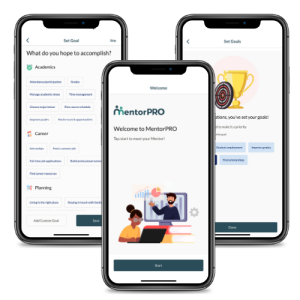
With funding from NSF and the Tools Competition, MentorPRO is exploring how we can ethically and effectively integrate AI-driven tools into mentoring. We’re seeking to design a tool that provides mentors with just-in-time guidance and summaries, providing mentors with real-time, evidence-based guidance. Unlike standalone chatbots, this approach maintains the mentor connection critical to student well-being […]

Seeds of doubt: How the source of mentorship initiation influences mentoring expectations

Jean Rhodes A substantial body of research, including meta-analyses, has demonstrated that informal mentoring relationships tend to yield stronger outcomes compared to their formal counterparts. This advantage persists across various educational and professional contexts, suggesting a fundamental difference in how these relationships function and develop. The reason for informal mentors’ relatively stronger influence may lie […]

New study highlights five key characteristics of successful workplace mentors

Deng, C., & Turner, N. (2024). Identifying key mentor characteristics for successful workplace mentoring relationships and programmes. Personnel Review, 53(2), 580–604. https://doi.org/10.1108/PR-08-2022-0535 Workforce mentoring programs have become increasingly common, with more than 80 percent of Fortune 500 companies now offering some version of them. But not all mentors deliver the kind of results organizations hope […]