Entries by Jean Rhodes

On Methods: What’s the difference between qualitative and quantitative approaches?

Editors Note: We are very fortunate to have Adar Ben-Eliyahu, Ph.D. our new Methods Editor, sharing with us her considerable expertise on research methods. Dr. Ben-Eliyahu completed her doctorate in developmental psychology at Duke University, where she honed very strong skills in methods. She is currently a MacArthur Foundation Postdoctoral Fellow at the Center for Evidence-Based […]

Share Your Experience and I’ll Lend You My Ear: Study Shows how Older Adults Benefit from Mentoring

Summarized Jean Rhodes The rewards that mentors receive are rarely considered in stories on mentoring. Instead, the process tends to be conveyed in terms of the adult selflessly giving to the mentee in a selfless, one-sided relationship. It would be a mistake, however, to assume that the mentor gets relatively little from the relationship. In […]

Why Don’t We Teach Ph.D.s to Be Mentors? Adding mentoring skills to doctoral training is a key to graduate-education reform.

By Maria LaMonaca Wisdom Reprinted from Chronicle of Higher Education SEPTEMBER 21, 202 Since January, I’ve spent hours on Zoom fielding questions from doctoral students and postdocs about mentoring and mentors. They’ve been asking questions like: “Can you sever a relationship with a mentor without burning bridges?” “How important is ‘chemistry’ in a mentor-mentee relationship?” “What’s […]

When Teachers and School Counselors Become Informal Mentors, Students Thrive

By Madeline Will, Reprinted from the Education Week For years, the research has been clear: Teacher-student relationships matter. And now, a new working paper shines more light on just how important these relationships can be for students’ academic success. Some students form deep connections with their teachers, counselors, or athletic coaches, who are often the adults […]

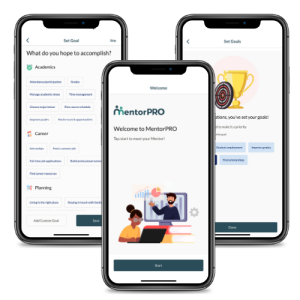
“There’s an App for that!”: How technology-delivered interventions could revolutionize mentoring

by Jean Rhodes In an influential chapter, mentoring researchers Timothy Cavell and Chris Elledge (2014) argued that the field of youth mentoring needs to move from the common “relationship as intervention” model (i.e., the friendship model where the primary goal is form a close bond) to a “relationship as a context for intervention” model. In this latter […]

Mentors are well positioned to

by Jean Rhodes This week, Dr. Alexandra Werntz, Sam McQuillin, Tom Keller and several other colleagues are presenting data at the 2024 Summer Institute on youth Mentoring   hat show that the demand mental health services, including those provided by psychologists, counselors, and social workers,  vastly exceeds the supply. Indeed, less than a third of […]

Youth-initiated mentoring: A scalable approach to addressing mental health problems

Viewpoint (Reprinted from the Journal of the American Medical Association Psychiatry, Published online April 28, 2021. doi:10.1001/jamapsychiatry.2021.0490) By Levi van Dam,  Jean Rhodes, and Renée Spencer, Although adolescents have lower COVID-19 infection rates compared with adults, the pandemic is taking a toll on young people’s mental health. There have been multiple reports of increases in […]

Things May Fall Apart but You Will Make it Through with a Little Help from your Family, Friends, Teachers, and School

We are pleased to feature this thoughtful essay about first generation college students from Professor Margarita Azmitia. Dr. Azmitia grew up in Guatemala and is a Professor of Psychology at the University of California at Santa Cruz. She studies how family, peer, schools, and communities contour adolescents and young adults educational and identity pathways, adolescents’ friendships, […]

Youth-Initiated Mentoring as a Scalable Approach to Addressing Mental Health Problems During the COVID-19 Crisis

Levi van Dam, PhD1; Jean Rhodes, PhD2; Renée Spencer, EdD3 Author Affiliations Article Information JAMA Psychiatry. Published online April 28, 2021. doi:10.1001/jamapsychiatry.2021.0490 COVID-19 Resource Center Although adolescents have lower COVID-19 infection rates compared with adults, the pandemic is taking a toll on young people’s mental health. There have been multiple reports of increases in mental health challenges for adolescents during the […]