Entries by Ariel Ervin

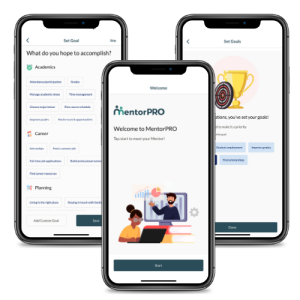
Strive for College Joins with College Board and CommonApp to Provide Virtual Mentoring to Millions of Underserved College Hopefuls

New collaboration will integrate UStrive into student offerings to better support underserved high school students, as the pandemic drives unprecedented interest in virtual mentoring Featured Article by Strive for College, PR Newswire Strive for College, a nonprofit organization that provides free online mentoring services for college-bound students announced that they are collaborating with the College […]
Ways to promote social justice in developmental research for African American youth

Smith, C. D., & Lee, J. R. S. (2020). Advancing social justice and affirming humanity in developmental science research with African American boys and young men.  Applied Developmental Science, 24(3), 208–214.  https://doi.org/10.1080/10888691.2019.1630277 Summarized by Ariel Ervin Notes of Interest:  Barbarin, Tolan, and Gaylord-Harden proposed a model of Adversity, Adaptation, and Positive Development of African American Boys […]

Do some mentoring models send the wrong message to marginalized youth?

By: Bernadette Sánchez, PhD, Reprinted from National Mentoring Resource Center Editor’s Note: Several members of the NMRC Research Board participated in the 2017 National Mentoring Summit this past February, leading a research track that featured OJJDP-funded research and totaled 13 workshops across the multi-day event. We asked several Research Board members to share their key […]

New study explores volunteers’ motivations for mentoring youth

Miranda-Díaz, M., Clark-Shim, H., Keller, T. E., & Spencer, R. (2020). Determinants of Motivation for Mentoring Among Adults Volunteering to Mentor Youth. Journal of Youth Development, 15(4), 174–189. https://doi.org/10.5195/jyd.2020.881 Summarized by Ariel Ervin Notes of Interest:  A majority of mentoring programs depend on volunteers to mentor youth. This study aims to identify some key factors that […]

Improving mental health outcomes for maltreated children in foster care

Taussig, H. N., Weiler, L. M., Garrido, E. F., Rhodes, T., Boat, A., & Fadell, M. (2019). A Positive Youth Development Approach to Improving Mental Health Outcomes for Maltreated Children in Foster Care: Replication and Extension of an RCT of the Fostering Healthy Futures Program. American Journal of Community Psychology, 64(3–4), 405–417. https://doi.org/10.1002/ajcp.12385 Summarized by […]

Strengthening Connections: Mentoring Youth During a Pandemic

By U.S. Department of Justice, Office of Juvenile Justice and Delinquency Prevention, Reprinted from National Mentoring Resource Center Youth mentoring relies on the power of human connections. Maintaining those connections in the face of the COVID-19 pandemic may be challenging, but it is an important and worthwhile effort. As President Trump said, “Mentors serve not […]

Moving Into the Long Term

With some colleges and universities planning to continue online learning into the spring, students are now looking at over a year of learning from home. How will their well-being and academics be affected? Featured Article by Lilah Burke, Inside Higher Ed As the school semester comes to a close, remote learning remains the recommended option […]

Time to listen in and observe to foster better mentor-mentee relationships

Lucas-Thompson, R. G., Weiler, L. M., Haddock, S. A., Henry, K. L., Zimmerman, T. S.,  Krafchick, J., & Prabhu, N. (2020). “Listening In”: Improving the Science and Practice of Mentoring Through Naturalistic Observations of Mentor–Mentee Relationships. Journal of Child and Family Studies. https://doi.org/10.1007/s10826-020-01777-3 Summarized by Ariel Ervin Notes of Interest: Although many studies and papers have repeatedly […]

University/After-school Reading Partnerships Help Students Succeed

By Stacy Delacruz, Angie Smith and Shannon Tovey, Reprinted from Youth Today After-school programs provide a wide range of benefits for students, families and communities. According to Youth.gov, these programs can boost academic performance, promote physical health and provide a safe, structured environment for the children of working parents.  Ed.gov reports that a national evaluation […]