No One Should Leave Empty-Handed: Single-Session Approaches for Youth on Waitlists
By Jean Rhodes
When a young person and their family reach out to a mentoring program, they are at a peak moment of motivation and readiness. Something has prompted them to ask for help. It might be a struggle at school, a difficult transition, or a parent’s growing worry. Whatever the reason, that window of openness is precious and should not be squandered. Yet in many programs, waitlists stretch for months. By the time a match is made, the urgency has faded, family circumstances have shifted, and the moment has passed.
Single-session consultations (SSCs) offer one way to act on that readiness immediately. An SSC is a brief, structured meeting (typically 20 to 30 minutes) between a young person and a trained staff member, volunteer, or paraprofessional. Rather than simply gathering intake information and sending families home to wait, programs can use this encounter to deliver something immediately useful. An SSC typically begins by inviting the young person to describe what is going on in their own words and then asking a deceptively simple question: imagine you woke up tomorrow and the problem had somehow resolved overnight, what would be different? What would you notice first? This kind of question, drawn from solution-focused therapeutic traditions, shifts attention away from what is wrong and toward what the young person already knows about what a better situation looks like. From there, the conversation turns to strengths. What has worked before, who in their life has been helpful, what they are already doing well. The staff member could then help the young person identify one or two concrete steps they can take in the coming days and connects them, where possible, with a peer or natural mentor who has navigated something similar. The encounter closes with a plan. The evidence from therapeutic settings is clear that even a single well-structured conversation of this kind can meaningfully shift how a young person thinks about asking for help and what they believe is possible for themselves (Schleider and Weisz, 2017; Dobias et al., 2022). Programs could train staff or advanced peer mentors to deliver SSCs at the point of intake, extending meaningful support without dramatically increasing costs.
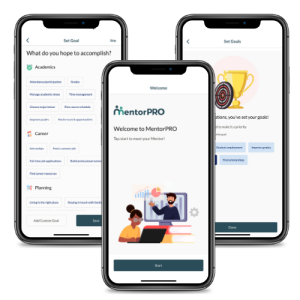
The Center’s new Connected Futures Flash Course is a free single-session intervention that can be walked through as part of the SSC, or assigned as an immediate follow-up to it. The course is 20-minute online intervention that guides young people in identifying their immediate goal, deciding who in their existing network they will approach for support, and committing to a concrete first step. A young person who does not yet have a formal mentor can leave an SSC with both the motivation and a specific plan for building the kind of supportive youth-initiated relationships that mentoring programs can help foster. In a pilot evaluation at a public university located in the Northeastern United States, students offered the Flash Course were nearly three times more likely to engage with it than students offered a longer, four-session version of the same curriculum, and completers showed large, statistically significant gains in networking self-efficacy (Cohen’s d = 1.23), with qualitative interviews confirming that students intended to take concrete actions to build connection. This and other SSI’s (e.g., re mental health, belonging) could be useful tools for waitlist youth to use. In fact, the idea of SSIs arose from a simple but often overlooked observation that most people who begin traditional mental health treatment don’t complete the recommended course. In fact, research shows that the majority of people attend just one or two sessions before discontinuing care, making the traditional multi-session model ineffective for many who need help. In other words, the first session is often the only session. Work in the SSC and SSI field has been pioneered by Northwestern Professor, Jessica Schleider, who helped us develop the Flash s course. Her research has demonstrated that interventions as brief as 20 minutes can create meaningful improvements in mental health outcomes.
The broader point is straightforward. That the waiting period need not be passive. Whether through a brief intake consultation, a structured digital tool like the Flash Course, or a supported activity that draws in a natural mentor, programs have evidence-based options for keeping young people engaged and moving forward. No young person who reaches out for support should leave empty-handed simply because the program is not yet ready for them.
P.S. The Center is currently developing and testing a SSC for mentoring programs. We would love partners for this work so please reach out if your program is interested in getting involved! jean.rhodes@umb.edu