New Mentoring Research Roundup: Jean Rhodes and Megyn Jasman on Why Mentors Leave, and What Programs Can Do About It
Mentoring Research Roundup: What Keeps Mentors Showing Up, And What Doesn’t
A recent episode of the Mentoring Research Roundup, hosted by Mike Gehringer, brought together researchers Megyn Jasman and Dr. Jean Rhodes to discuss their collaborative study on why mentors end matches early, and what programs can do about it. Working with a Big Brothers Big Sisters dataset, Jasman and Rhodes analyzed mentors’ reasons for ending a match prematurely. Their goal is to turn program data into actionable guidance for improving mentor retention.
Reasons for early match endings clustered into three categories. The most common reason for premature match closure included external life changes: a new job, a move, returning to school. External factors accounted for approximately 65% of cases, highlighting that many of the variables that led to the end of the mentoring relationships were largely outside a program’s control. The remaining closures stemmed from poor mentor-mentee fit or from problems in relationships with the youth’s caregiver or program staff, which programs can feasibly address.
Findings
The strongest predictor of match length was not mentor motivation or match chemistry—it was the quality of the mentor’s relationship with the youth’s parent or caregiver. Strong caregiver-mentor relationships were associated with longer matches and appeared to buffer against other problems in the match. This finding has direct implications for how programs allocate attention and resources. Their findings show that caregiver engagement is a core predictor of whether a match survives.
Match support staff emerged as a critical and underappreciated element. Coordinators who actively mediate between mentors and caregivers—clarifying expectations, interpreting behavior (a missed pickup, an unresponsive text), and troubleshooting conflicts before they become match-ending—can make a measurable difference.
What Programs Should Do Differently
1) Audit caregiver engagement now. Most programs treat caregivers as consent-givers rather than relationship partners. Identify one or two concrete changes—routine joint check-ins, a shared communication protocol—and implement them with the mentee’s caregiver.
2) Train mentors on cultural humility and family partnership from the start. Mentors positioned as “rescuers” may undermine the caregiver’s trust. Training should explicitly reframe the mentor’s role as supporting family strengths rather than substituting for them.
3) Partnering with a researcher to identify local predictors of early closure is feasible and can produce findings more relevant to your specific population than any one study.
What’s Coming
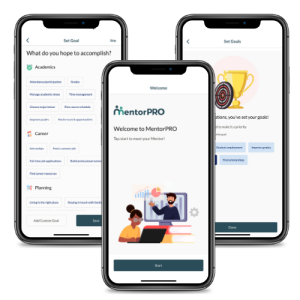
Rhodes and Jasman also discussed several projects in development: a paper on mentor motivation (drawing on Jasman’s thesis work, with early findings suggesting that more nuanced motivations predict better outcomes), a large-scale umbrella meta-analysis synthesizing roughly 120 mentoring program evaluations, and MentorPRO—a platform designed to translate three decades of mentoring research into tools for mentor training, goal-setting, and evaluation. They are also piloting AI as a decision-support tool for mentors, designed to deliver timely research guidance to mentors.
View the full interview here