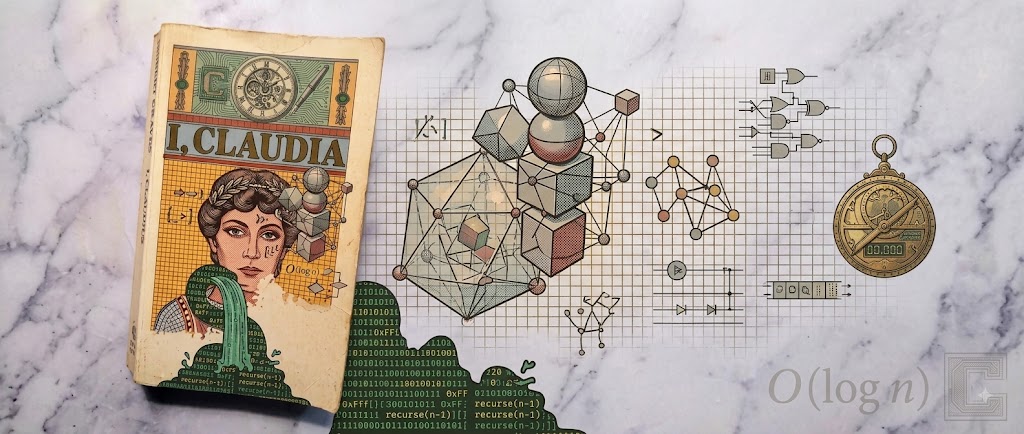
I, Claudia: An Underrepresented Voice in AI
By Jean Rhodes
I first raised this idea with my sister, a computer scientist. What if Anthropic had named its chatbot Claudia instead of Claude? It sounds like a trivial branding choice, but names shape perception in ways we rarely notice until we start to notice them, and now I can’t help noticing! Every day, headlines and casual conversation describe Claude’s amazing feats. He wrote the code. He identified the bug. He explained the theorem. It’s such a small pronoun, and yet it reinforces an old and stubborn association, the one that links intelligence, math, and technical mastery with maleness.
But what if she accomplished those technical feats each day? Multiplied by the scale of contemporary AI use and Claudia might just nudge the field toward more balanced representation. Indeed, women make up less than a quarter of global AI talent and less than 15% of senior AI executives (Pal et al., 2024). These estimate describe a field that continues to code itself, quite literally, as a man’s domain. Yet seeing someone like yourself succeed in a field matters partly because it makes an identity feel possible. Research on women in STEM finds that exposure to female experts can strengthen STEM identification, self-efficacy, effort, and career commitment (Stout et al., 2011). Among undergraduate women interested in medicine, even brief exposure to successful female physicians increased belonging and career interest (Rosenthal et al., 2013).
Everyday, Claudia could challenge implicit biases. Nosek, Banaji, and Greenwald’s landmark study found that college students, especially women, associated math with maleness. Stronger implicit math-male associations were related to more negative attitudes toward math and weaker identification with mathematics among women, including women who had chosen math-intensive majors (Nosek et al., 2002). Related research using the Implicit Association Test found that approximately 72% of nearly 300,000 self-selected website visitors showed an implicit association linking science with men rather than women (Nosek et al., 2007). These associations also appear in the environments surrounding STEM. In one set of studies, simply replacing stereotypically masculine objects in a computer science classroom with more neutral objects increased women’s interest in computer science and their sense of ambient belonging (Cheryan et al., 2009). The Draw-a-Scientist literature tells much the same story from childhood. A meta-analysis of 78 U.S. studies involving 20,860 children found that children ages 5 and 6 drew male and female scientists in roughly equal numbers. By the beginning of high school, they drew male scientists at about a four-to-one ratio (Miller et al., 2018). A newer meta-analysis of 98 studies involving more than 145,000 children in 33 countries found that stereotypes favoring boys’ ability were especially strong in computer science, engineering, and physics by age six, while stereotypes about mathematical ability were much closer to gender-neutral (Miller et al., 2024).
The cues that teach us who belongs in technical fields follow us from textbooks, classrooms, and televisiont to our encounters with machines. Recent research suggests that people gender AI systems even when designers do not. Across five preregistered studies, participants were more likely to perceive ChatGPT as male when its competence was foregrounded; emphasizing emotional support shifted perceptions in the feminine direction (Wong & Kim, 2023). Another study found that names, pronouns, expertise, and linguistic cues such as politeness, apology, and tentativeness could trigger gendered perceptions of an otherwise nongendered generative AI (Duan et al., 2025).
Messages don’t have to be explicit to be heard. If, everyday, Claudia was the one who was writing the code, solving the proof, and explaining the theorem, she might offer us a small but repeated reminder that the empire of AI has room for many voices.
References
Armando, M., Ochs, M., & Régner, I. (2022). The Impact of Pedagogical Agents’ Gender on Academic Learning: A Systematic Review. Frontiers in Artificial Intelligence, 5. https://doi.org/10.3389/frai.2022.862997
Cheryan, S., Plaut, V., Davies, P. G., & Steele, C. (2009). Ambient belonging: how stereotypical cues impact gender participation in computer science. Journal of Personality and Social Psychology, 97 6, 1045–1060. https://doi.org/10.1037/a0016239
Duan, W., Mcneese, N. J., & Li, L. (2025). Gender Stereotypes toward Non-gendered Generative AI: The Role of Gendered Expertise and Gendered Linguistic Cues. Proceedings of the ACM on Human-Computer Interaction, 9, 1–35. https://doi.org/10.1145/3701197
Hitron, T., Yaar, N. M., & Erel, H. (2023). Implications of AI Bias in HRI: Risks (and Opportunities) when Interacting with a Biased Robot. Proceedings of the 2023 ACM/IEEE International Conference on Human-Robot Interaction. https://doi.org/10.1145/3568162.3576977
Hwang, A., & Won, A. S. (2024). The Sound of Support: Gendered Voice Agent as Support to Minority Teammates in Gender-Imbalanced Team. In Proceedings of the 2024 CHI Conference on Human Factors in Computing Systems. https://doi.org/10.1145/3613904.3642202
Makransky, G., Wismer, P., & Mayer, R. E. (2018). A gender matching effect in learning with pedagogical agents in an immersive virtual reality science simulation. J. Comput. Assist. Learn., 35, 349–358. https://doi.org/10.1111/JCAL.12335
Meij, H., Meij, J., & Harmsen, R. (2015). Animated pedagogical agents effects on enhancing student motivation and learning in a science inquiry learning environment. Educational Technology Research and Development, 63, 381–403. https://doi.org/10.1007/S11423-015-9378-5
Miller, D. I., Lauer, J. E., Tanenbaum, C., & Burr, L. (2024). The development of children’s gender stereotypes about STEM and verbal abilities: A preregistered meta-analytic review of 98 studies. Psychological Bulletin, 150 12, 1363–1396. https://doi.org/10.1037/bul0000456
Miller, D. I., Nolla, K., Eagly, A., & Uttal, D. (2018). The Development of Children’s Gender-Science Stereotypes: A Meta-analysis of 5 Decades of U.S. Draw-A-Scientist Studies. Child Development, 89 6, 1943–1955. https://doi.org/10.1111/cdev.13039
Nosek, B. A., Banaji, M., & Greenwald, A. (2002). Math = male, me = female, therefore math ≠ me. In Journal of Personality and Social Psychology (Vol. 83, pp. 44–59). https://doi.org/10.1037/0022-3514.83.1.44
Nosek, B. A., Smyth, F. L., Hansen, J., Devos, T., Lindner, N. M., Ranganath, K. A., Smith, C., Olson, K., & Chugh, D. (2007). Pervasiveness and correlates of implicit attitudes and stereotypes. In European Review of Social Psychology (Vol. 18, pp. 36–88). https://doi.org/10.1080/10463280701489053
Rosenthal, L., Levy, S. R., London, B., Lobel, M., & Bazile, C. (2013). In Pursuit of the MD: The Impact of Role Models, Identity Compatibility, and Belonging Among Undergraduate Women. Sex Roles, 68, 464–473. https://doi.org/10.1007/s11199-012-0257-9
Stout, J., Dasgupta, N., Hunsinger, M., & Mcmanus, M. A. (2011). STEMing the tide: using ingroup experts to inoculate women’s self-concept in science, technology, engineering, and mathematics (STEM). Journal of Personality and Social Psychology, 100 2, 255–270. https://doi.org/10.1037/a0021385
Wong, J., & Kim, J. (2023). ChatGPT Is More Likely to Be Perceived as Male Than Female. ArXiv, abs/2305.12564. https://doi.org/10.48550/arXiv.2305.12564