Four New Studies Highlight the Need for Proactive Student Support
By Jean Rhodes
Like many colleges and universities, UMass Boston (where I work) invests heavily in counseling centers, emergency aid, disability services, career offices, and academic advising. Part of the problem is that students must first recognize their own needs, locate the right office, understand its procedures, and ask for help at the moment when stress has made each of those tasks more difficult.
A recent Inside Higher Ed review of reviews four studies that examined this issue. In the 2025 Student Financial Wellness Survey, nearly all participating institutions offered mental health or counseling services, but a quarter of the students didn’t even know those services were available. The same survey found that 54 percent of respondents experienced at least one form of basic needs insecurity and that 57 percent felt lonely sometimes or always (Fletcher et al., 2026).
Another analysis found that the proportion of students receiving emergency aid fell from 44 percent in 2021 to 4 percent in 2025, even as more institutions reported operating emergency aid programs. A separate study estimated that between 135,400 and 286,254 autistic undergraduates are enrolled in American colleges, far more than many institutions appear to recognize (Cox et al., 2026). Finally, a commissioned study of career literacy found that people who understood how to identify and navigate career options considered more possible jobs and had greater employment security than those with less career literacy (The DeBruce Foundation, 2026).
These findings come from different methods and should not be treated as equivalent. The Trellis survey was large and weighted, but its response rate was 7.8 percent and it relied on self-report. The autism estimates synthesized several forms of incomplete data and produced a wide range rather than a single prevalence figure. The career literacy findings are correlational and come from a foundation-commissioned report. Still, the studies converge on the idea that services cannot improve student success when students do not know they exist, do not recognize that they qualify, or cannot navigate the steps required to use them.
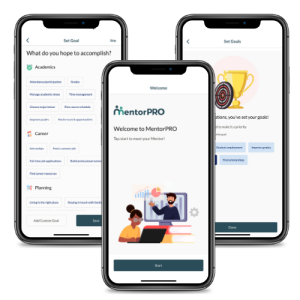
One solution is to engage more peer mentors as navigators. Peer mentoring is an affordable, scalable point of contact who can notice early concerns, normalize help seeking, and connects students to the right level of support. In a stepped model, peers provide timely, low-intensity guidance while trained professionals handle needs that require specialized expertise. The relationship matters because advice is more likely to be heard when it comes from someone who understands the student’s daily reality. But the relationship alone is not enough. Peer mentors need clear roles, training, compensation, supervision, and reliable pathways for referral. This logic informed MentorPRO, a technology-supported peer mentoring platform that my colleagues and I studied at a private university in the northeastern United States. All 4,832 incoming first-year students were eligible to participate, and 2,572 used the platform at least once. Students were paired with trained and paid peer mentors who sent proactive messages about common transition issues, responded to questions, and connected students with campus resources. Weekly check-ins asked students to rate challenges involving academic habits, planning, relationships, finances, physical health, well-being, and career concerns. Elevated concerns could prompt targeted outreach and, when needed, referral to professional services (Werntz et al., 2026). The platform was designed to reduce the distance between recognizing a problem and receiving appropriate help. A student did not have to know that a financial concern might warrant emergency aid or that growing isolation might call for a counseling referral. The check-in created a regular occasion for reflection, while the mentor provided a human connection who could interpret the concern and help the student act. Technology supported the process by making communication easier and allowing supervisors to monitor safety and implementation. In the second year of the program, greater use of check-ins and more student-initiated messages were associated with higher end-of-year grade point averages. More frequent check-ins were also associated with higher academic self-efficacy and overall well-being. Students who sent more messages reported greater belonging, academic self-efficacy, and well-being. These findings are consistent with the possibility that regular self-monitoring, combined with responsive peer support, helps students address manageable problems before they become crises (Werntz et al., 2026).
Proactive peer mentoring can narrow that gap by making support part of the ordinary college experience rather than a special service students must discover on their own. Colleges do not necessarily need another office. They need stronger connections among the offices they already have and a reliable way to reach students before small problems compound. Trained peer mentors can help provide that connective tissue, especially when technology supports rather than replaces their work. The early MentorPRO findings do not yet establish causal effects, and randomized evaluations across more diverse institutions are needed. They do, however, point toward a practical shift. Student success is more likely when institutions stop treating help as something students must find and start building systems that bring timely, appropriate support within reach.