Profiles in Mentoring: Mariah Kornbluh on How Everyday Relationships Help Young People Push Back Against Division
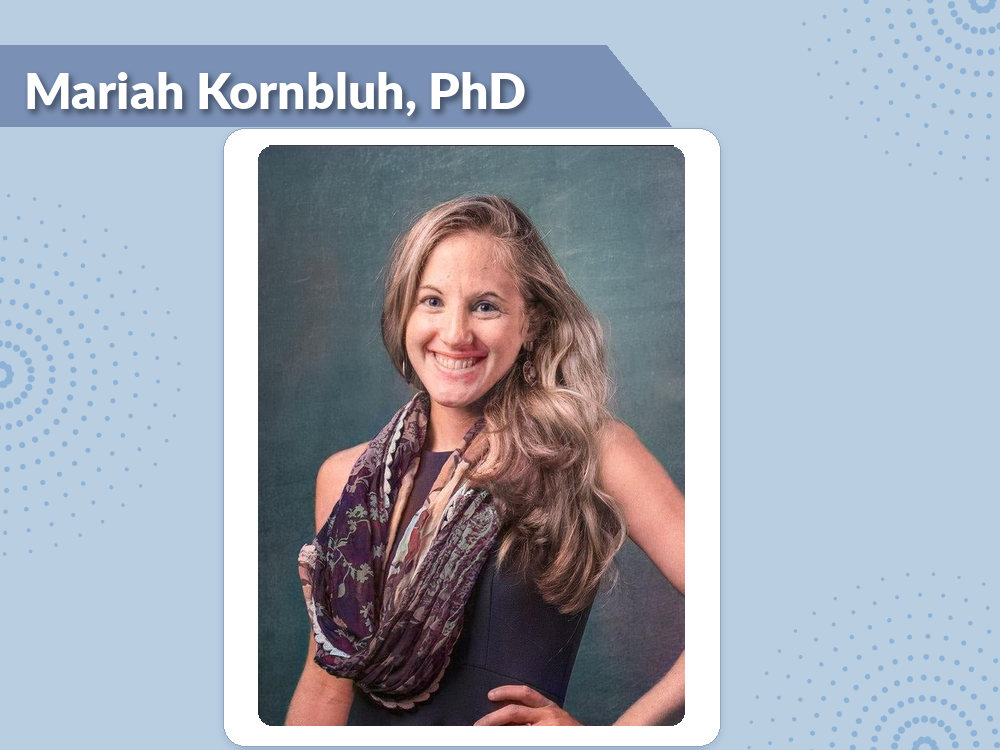
Young people today come of age in communities where social and political divisions are hard to miss, and many of the messages they encounter, online and off, invite them to see other groups as threats. How do they learn to resist those messages? A new study by Mariah Kornbluh and her colleagues offers some answers. Drawing on in-depth interviews with 45 Catholic and Protestant adolescents in post-conflict Northern Ireland, the team found that intergroup contact among peers from different ethno-religious backgrounds disrupted adolescents’ engagement in polarizing and divisive rhetoric. The adolescents also viewed educational actors and settings as less influential than their personal connections to peers and family. A companion study extends this work, showing how young people negotiate competing sociopolitical messages across family and peer contexts and how contact with peers from the other community helps them develop more critical and flexible understandings of the conflict. Dr. Kornbluh is an associate professor of psychology at the University of Oregon, where she leads the Oregon YEP Lab, and she is an editor of Evidence & Policy. We spoke with her about what drew her to this work, what the findings mean for mentors, and where her research is headed next.
The Chronicle (C): Much of your work focuses on young people’s sociopolitical development in settings marked by conflict. What first drew you to this work?
Mariah Kornbluh (MK): As a community psychologist, I am interested in the social and contextual factors that shape young people’s understanding of the world around them and the ways they translate that understanding into civic and community engagement. Northern Ireland offered a particularly compelling context for examining these questions. Young people there are growing up in communities shaped by a history of ethnopolitical conflict, where social identities, collective memories, and political narratives remain highly salient. While the historical context is unique, many of the developmental processes are similar to those we see in increasingly polarized societies, including the United States. Questions about how young people are exposed to competing social and political narratives, how they make sense of division and inequality, and what experiences help them engage constructively across differences are relevant in both contexts. Ultimately, I am interested in understanding: how young people develop the critical reflection, perspective-taking, and social connections that can help them challenge divisive narratives and contribute to more democratic communities.
C: Across in-depth interviews with 45 adolescents, you found that intergroup contact among peers from different ethno-religious backgrounds disrupted their engagement in polarizing and divisive rhetoric. What did that contact look like, and why do you think it was so powerful?
MK: What was striking is that the contact adolescents described was often quite everyday. Rather than occurring exclusively through formal peacebuilding programs, contact happened through friendships, employment opportunities, youth organizations, and other shared activities where young people spent meaningful time together. When adolescents developed meaningful relationships with peers from different backgrounds, they often encountered experiences that contradict stereotypes or polarized narratives they had previously heard. I think this is particularly important because adolescence is a developmental period when young people are becoming more capable of perspective-taking and critically evaluating the messages they receive. Intergroup contact did not necessarily eliminate disagreement, but it often introduced nuance and complexity into how young people understood social and political issues. Instead of viewing groups as monolithic, they began to recognize shared experiences, common concerns, and the possibility of multiple perspectives existing simultaneously.
C: The adolescents saw educational actors and settings as less influential than their personal connections to peers and family, and they were more skeptical of media sources than of the people closest to them. What does that suggest for mentors and other caring adults who want to help young people navigate divisive messages?
MK: One of the strongest lessons from the study is that influence often flows through relationships rather than information alone. Young people were certainly exposed to messages through schools, media, and public institutions, but they tended to place greater trust in people with whom they had ongoing relationships. For mentors and caring adults, this suggests that credibility comes less from presenting the “right” information and more from creating spaces where young people feel safe discussing difficult issues, questioning assumptions, and considering alternative perspectives. The findings also suggest that mentors can serve as important role models in how they engage with difference. Many adolescents described learning not only from direct interactions with peers from other backgrounds but also from observing how adults talked about and engaged with individuals from different communities. When mentors challenge stereotypes, acknowledge complexity, demonstrate curiosity about others’ experiences, and model respectful disagreement, they provide young people with examples of how to navigate social and political differences constructively. Importantly, mentors can also help youth examine biases within their own groups. In many polarized settings, divisive narratives are often reinforced through trusted in-group networks. Caring adults can create opportunities for critical reflection by encouraging young people to ask questions such as: Where did this belief come from? What experiences might challenge this assumption? How might someone from a different background interpret the same situation? Rather than telling young people what to think, mentors can model how to think critically and compassionately.
C: What lessons might these findings hold for mentoring programs working with young people in polarized communities, and where is your work headed next?
MK: One of the main lessons from this study is that reducing polarization is often less about changing attitudes through information alone and more about creating opportunities for meaningful relationships, dialogue, and reflection. For mentoring programs, this suggests that fostering opportunities for cross-group interaction and supporting critical reflection may be particularly valuable for helping young people navigate divisive social and political issues. The findings also highlight the importance of adults serving as role models. Young people are constantly observing how trusted adults talk about social groups, respond to differences, and engage with community tensions. Mentors can play an important role by modeling curiosity, empathy, and critical thinking, while also helping youth recognize and challenge stereotypes that may circulate within their own communities and social networks. Looking ahead, my work is increasingly focused on understanding how adults and peers can support young people in responding to divisive rhetoric and prejudice. Northern Ireland has experienced growing demographic change in recent years, alongside rising tensions and prejudice directed toward newcomer communities. Building on our previous findings, we are interested in understanding what mentoring strategies are most effective for helping youth critically reflect on exclusionary narratives, engage constructively across differences, and develop more inclusive understandings of community.
Read Dr. Mariah Kornbluh’s full paper in the Journal of Adolescent Research here, and the companion study in Social Development here.