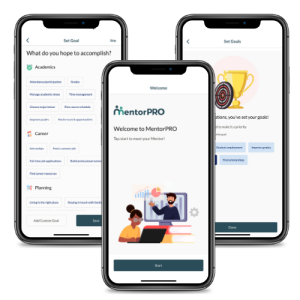
New Study Shows Strong Effects for Social Capital Intervention
Hersch, E., Werntz, A., Schwartz, S. E. O., Raposa, E. B., Hughes, J., Parnes, M. F., & Rhodes, J. E. (2025). Testing the effects of a social capital intervention on college student retention and academic success. American Journal of Community Psychology. https://doi.org/10.1002/ajcp.70027
Key Takeaways:
- Students who passed the course were more than three times as likely to graduate within four years and nearly three times as likely to graduate within six years compared to all other students.
- Notably, Connected Scholars attracted students at elevated risk for attrition, including first-generation and Pell-eligible students.
- Brief, skills-based social capital interventions can substantially boost student retention and graduation by teaching students how to recruit mentors and navigate institutional relationships, offering a scalable approach to supporting long-term college success.
Introduction
Hersch and colleagues (2025) implemented longitudinal administrative data to evaluate whether a brief, credit-bearing social capital intervention can improve college retention and graduation outcomes for underrepresented students. The study centers on Connected Scholars, a one-semester course designed to strengthen students’ mentoring relationships, help-seeking skills, and access to institutional support. Given persistent inequities in college completion, the authors address whether teaching students how to build social capital can meaningfully alter long-term academic trajectories.
Methods
The authors analyzed institutional records from a large, urban, minority-serving public university. Participants included over 900 undergraduate students who enrolled in Connected Scholars between 2018 and 2022, along with more than 32,000 non-participating students who served as a comparison group. They used logistic regression models to test whether enrolling in or passing the course predicted one- and two-year retention, four- and six-year graduation, and cumulative GPA at graduation, adjusting for demographic, socioeconomic, and academic covariates.
Results
Passing Connected Scholars was associated with higher odds of one- and two-year retention. Students who passed the course were more than three times as likely to graduate within four years and nearly three times as likely to graduate within six years compared to all other students. Enrollment without successful course completion was not associated with improved outcomes. No significant differences emerged for cumulative GPA at graduation.
Discussion
These findings suggest that a brief, skills-based social capital intervention can yield durable effects on college persistence and timely degree completion. Notably, Connected Scholars attracted students at elevated risk for attrition, including first-generation and Pell-eligible students, and course completion emerged as one of the strongest predictors of graduation.
Implications for Mentoring Programs
The findings highlight the potential of brief, skills-based interventions to produce meaningful and lasting gains in student success. Connected Scholars demonstrates that explicitly teaching students how to identify, recruit, and sustain mentoring relationships can strengthen the relational infrastructure that supports persistence and degree completion by focusing on help-seeking skills, networking strategies, and institutional navigation.
Read the full paper here