Profiles in Mentoring: Gabriel Kuperminc on Relationships, Discrimination, and Resilience
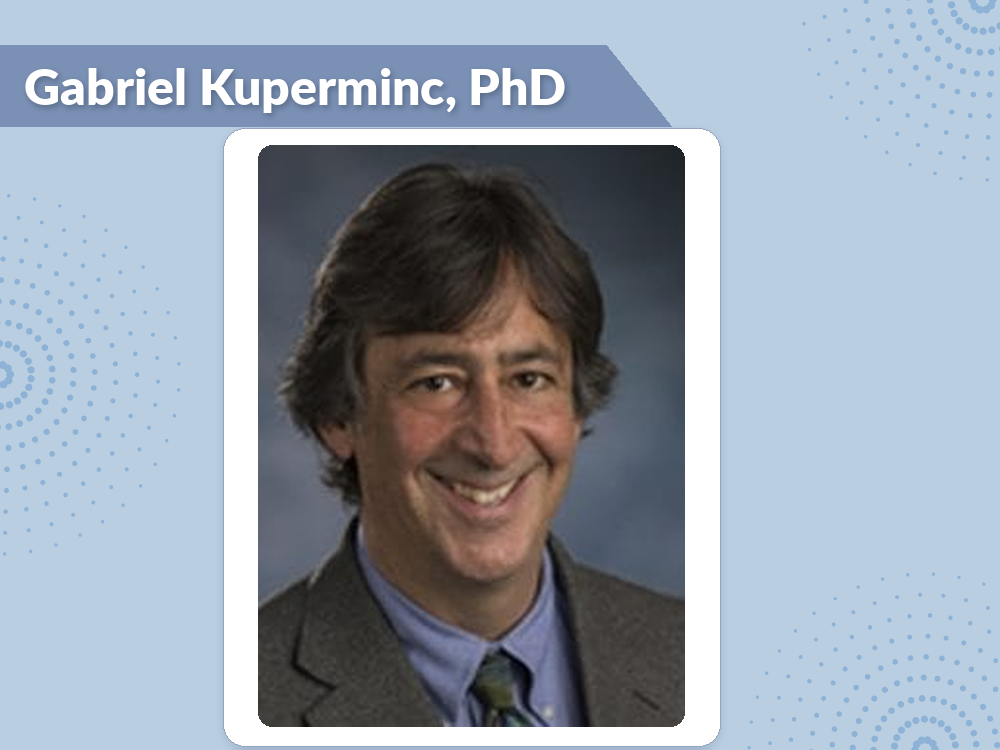
Gabriel Kuperminc is Professor of Psychology and Public Health at Georgia State University, where he chairs the Community Psychology Doctoral Program. His research examines resilience and positive youth development among Latino/a youth and youth from immigrant families, with particular attention to the relationships with mentors and other caring adults that help young people thrive. We recently had the opportunity to speak with Gabe about his new study on informal mentoring, discrimination, and behavioral health among Latino/a adolescents and emerging adults, featured here in The Chronicle.
The Chronicle (C): You have spent many years studying resilience and positive youth development among Latino/a youth and youth from immigrant families. What first drew you to this work?
Gabriel Kuperminc (GK): As a child of immigrants from Argentina, I did not see myself or my experience represented in the research I was reading as a graduate student back in the 1990s. Two of my graduate mentors – Melvin Wilson and Robert Sellers – who were doing amazing research on Black families and Black identity, got me thinking about how I could focus on Latino/a communities in comparable ways and build on my training with Joe Allen focused on adolescent development of autonomy and relatedness. As a post-doc, I had the opportunity to work with Bonnie Leadbeater, managing a school-based research study in an ethnically diverse middle school. Hanging out with the mostly Latino/a ESOL students taught me a lot about the pride they took in helping their families navigate everyday life, how they helped one another learn to thrive in U.S. schools, and how many of their teachers misunderstood them and their families, often labeling them as troubled, apathetic, or unintelligent. Moving to a faculty position in Atlanta, I learned about the huge number of immigrants that arrived in the lead-up to the 1996 Olympics. Many were from Mexico and other parts of Latin America, and they came to stay. That community became my lab for this line of work.
C: Following 544 Latino/a youth across 11 waves of data, you found that having an informal mentor was associated with fewer internalizing problems among girls, and that among girls with a mentor, a higher quality relationship buffered the link between discrimination and internalizing problems. Why do you think mentors mattered in this way, particularly for girls?
GK: That’s tricky. Back to my post-doc experience, we were conducting a study of gender-linked vulnerability in pathways from stressful life events to psychopathology in adolescence. Our research confirmed findings from adult populations in that females appeared more vulnerable than males to experiences they viewed as threatening important relationships in their lives. This might help explain why strong, positive relationships with a mentor might protect girls from internalizing symptoms in the face of experiences of discrimination. More specific to mentoring, I think of research (e.g., Spencer et al., 2017), which has found gender differences in the types of things girls were likely to disclose to their mentors, with girls more likely than boys to talk about emotionally upsetting experiences. It may be that direct conversations about dealing with discrimination are more likely to happen in girls’ relationships and may have more satisfying results for girls who enjoy more positive relationships with their mentors.
C: About 72% of youth at the Wave 9 assessment reported having an informal mentor. For youth without a mentor, discrimination was associated with greater increases in externalizing problems over time, but that association was not significant for youth who had one. For both girls and boys with mentors, relationship quality also buffered the link between discrimination and externalizing problems. What does that suggest about the importance of relationship quality, beyond simply having a mentor?
GK: I guess the simplest answer is that not all mentoring relationships are created equal. A lot of nuance gets lost when our research compares youth with vs. without a mentor but does not take variation in relationship quality into account. The quality of relationship clearly matters. In our study, we weren’t able to tease apart whether different aspects of the relationship had unique associations with externalizing problems, or whether those associations differed for girls and boys. The measure we used assesses both “relational” and “instrumental” support, but we chose to use an overall composite because those subscales of the measure were strongly correlated (and the statistical model was already complicated enough!). I think trying to tease apart the unique contributions of these types of support to psychological well-being would be a good next step for this study.
C: What should mentoring programs and practitioners take from these findings, and where is your work headed next?
GK: One thing that stands out to me from this study is the incredibly damaging effect of discrimination. We might sometimes downplay the impact that the everyday ‘micro-aggressions’ we examined in this study can have on young people’s mental health. In this study experiencing those micro-aggressions was strongly related to mental health problems – and the AVERAGE level of internalizing problems for girls that did not have a mentor was in the clinically significant range! Having a relatively poor relationship with a mentor was not much better. Having a mentor was not a cure, but a positive relationship with a mentor definitely helped. I’d be interested to know how much youth were able to talk with their mentors about those experiences of discrimination, and how much mentors were able to help young people understand, cope with and maybe do something about the anger and frustration many of them were feeling.
I think the findings underscore the importance of work that many researchers and practitioners are doing using a social justice lens to emphasize the development of racial and ethnic identity and critical consciousness. We know through years of research that a strong sense of racial-ethnic identity and exposure to racial socialization that emphasizes cultural pride are protective factors and mentors are well-positioned to support those domains through discussions and activities with young people. Discussions and activities can involve things like critical discussion of current events and involvement in community service or social justice activism. While my study can’t make a direct link showing mentoring can promote resilience through discussions and activities that promote racial and ethnic identity and critical consciousness, but also a range of social-emotional skills, I think there’s plenty of reason to think that such pathways to resilience are possible for Latino/a youth from immigrant families.
A second thing that stands out to me is that nearly 1/3 of the youth in our sample were not able to identify a mentor – a figure that closely aligns with estimates of the “mentoring gap” that have been reported from national polls. The task ahead is not just figuring out strategies to fill that gap, but to ensure that mentoring relationships across the board are better equipped to meet youth’s needs in ways that the youth themselves view positively. More consistent with the resilience framework we used in our study is to recognize that most youth WERE able to identify mentors in their lives – if we focus too much on the mentoring gap, it is easy to underestimate the role that young people take in promoting their own development. Going forward, I think I want to learn more about how youth can take an active role in making mentoring work for them.
Read Dr. Gabriel Kuperminc’s full paper here.