“I felt like I was nobody. Then I felt alive:” Inside the classrooms where Black male teachers became mentors
Jones, K. V., Porter, S., Cooley, S., Haizlip, A., Parish, L., Muhammad, A. A., & Hawkins, I. L. (2026). Mentoring within a culturally responsive program: Insights from Black males and adolescents. Urban Education. Advance online publication. https://doi.org/10.1177/00420859261474227
By Jean rhodes
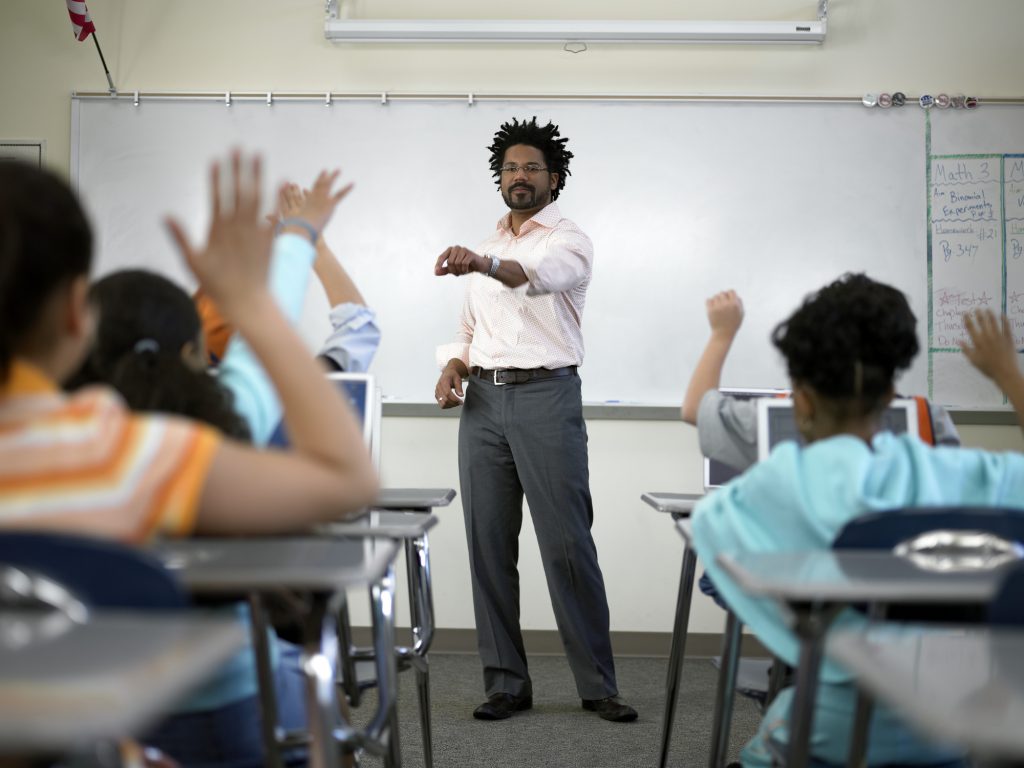
Caring adults already embedded in young people’s daily settings may be the field’s most valuable resource. A new qualitative study by Kristian Jones and colleagues (2026) shows what this kind of mentoring can look like when it is built into the school day itself. The study examined a culturally responsive Black studies elective in a large urban district on the West Coast, where every instructor was a Black man serving simultaneously as educator and natural mentor. Drawing on a broader multiyear mixed methods evaluation, the researchers observed fourteen classes, conducted 6 focus groups with 45 male middle and high school students across 5 schools, and interviewed 5 instructors between March 2022 and September 2023.
Two findings stand out.
- Relationships matter: Many students reported that they had never had a Black male teacher before entering the program, and they described the experience of being taught by men who shared their identities, and in some cases their neighborhoods, as transformative. Trust was built through small, consistent acts. Instructors checked in when something seemed off, followed students’ grades in other classes, called parents with good news rather than only bad, and showed up at basketball games and graduations. They also functioned as informal care coordinators, connecting students with tutoring, internships, food, clothing, and even free haircuts. The teaching itself was identity affirming (often joyful!). One instructor linked the graphic novel Watchmen to a lesson on the Tulsa Race Massacre, and classrooms featured rituals such as personalized handshakes that doubled as daily emotional check ins. Students described the result as a brotherhood. One young man put it simply, saying that he had felt like nobody before the program and felt “alive within.”
- Context matters: Instructors were clear that their ability to mentor depended on conditions well beyond their own dedication. Where colleagues and administrators understood and valued the program, it flourished. Where leadership turnover was high, discipline was rigid, or instructors were somehow treated as substitute teachers, the work suffered. One instructor described his program as being viewed as a throwaway necessity, and another noted that even a Black principal offered no solidarity, remarking that not all “skin folk are kinfolk.”
Caveats: This is a qualitative case study of a single program in one West Coast district during a particular moment in history. The findings describe how participants experienced the program rather than establishing its effects on grades, attendance, or wellbeing. The sample was purposively drawn from enrolled students, which means the perspectives of young people who disengaged or never even joined are absent, as are the views of administrators and parents. The authors are appropriately candid about these limits. I would add one more concern that the authors themselves raise in closing. The instructors were performing an enormous amount of uncompensated relational and logistical labor, and a model that depends on individual heroism risks burnout.
Implications: Decades of research have shown that natural mentoring relationships are associated with stronger academic engagement and psychological wellbeing among Black adolescents (Hurd & Sellers, 2013), and meta analytic evidence suggests that formal programs alone yield modest effects (Raposa et al., 2019). This study points toward a middle path in which schools deliberately create roles, curricula, and classroom cultures that allow mentoring to emerge naturally. It also suggests that recruiting Black male educators, while valuable, is not an end unto itself. These men succeeded because a culturally responsive curriculum gave their relationships content and purpose, and they struggled wherever administrators failed to treat their students as assets. For practitioners, the lesson is that mentoring requires scaffolding. It is obligation to support the adults who hold programs like together.
References
Hurd, N. M., & Sellers, R. M. (2013). Black adolescents’ relationships with natural mentors: Associations with academic engagement via social and emotional development. Cultural Diversity and Ethnic Minority Psychology, 19(1), 76–85. https://doi.org/10.1037/a0031095
Jones, K. V., Porter, S., Cooley, S., Haizlip, A., Parish, L., Muhammad, A. A., & Hawkins, I. L. (2026). Mentoring within a culturally responsive program: Insights from Black males and adolescents. Urban Education. Advance online publication. https://doi.org/10.1177/00420859261474227
Raposa, E. B., Rhodes, J., Stams, G. J. J. M., Card, N., Burton, S., Schwartz, S., Sykes, L. A. Y., Kanchewa, S., Kupersmidt, J., & Hussain, S. (2019). The effects of youth mentoring programs: A meta-analysis of outcome studies. Journal of Youth and Adolescence, 48(3), 423–443. https://doi.org/10.1007/s10964-019-00982-8