The Flipside of Microaggressions: How Micro-Recognitions Change Everything in Mentoring
By Jean Rhodes
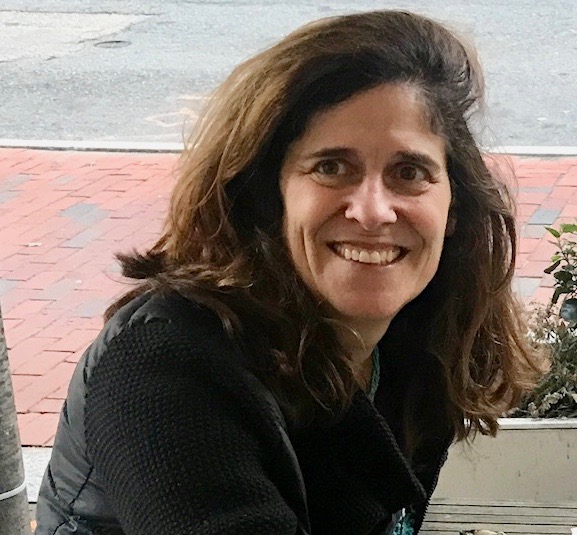
When Professor Becky Wai-Ling Packard joined the Center today for a webinar, we knew we were in for something good. What we did not anticipate was the sheer volume of interest. Over 500 attendees, nearly 70 comments and questions flooding the chat, and a palpable sense that she had touched something many program staff and mentors have long felt but rarely expressed. The topic was navigating difficult conversations in mentoring, and the turnout made it clear that this is a pressure point in the field, and practitioners are hungry for research-grounded guidance.
Packard holds the Mary E. Woolley Chair at Mount Holyoke College, received a Presidential Early Career Award, and recently served as an NSF director setting national priorities for undergraduate education. She is the author of Successful STEM Mentoring Initiatives for Underrepresented Students (Packard, 2016), a volume she told us she is now revising for a new edition later this year. She has worked with tech companies and over 60 national campuses on how to structure mentoring conversations in ways that lead to real development. Her talk drew on two decades of her own research as well as foundational work by Cohen, Steele, and Ross (1999), David Yeager, and others, and grounded in the experiences of actual mentees.
Packard opened by naming the tension at the heart of the problem. Mentees grow and change through both support and challenge, and most of us are far more comfortable in the cheerleader role. But growth requires the coaching role too, the voice that says “let’s try that again” and “can you stretch a little more?”
Being a good mentor means being willing to deliver feedback that is difficult to hear, in three registers: clarification (“Wait, I am confused”), gentle critique (“You are definitely getting close”), and direct feedback (“Honestly, you did drop the ball there”). What matters, as she put is put it, “is a person’s perception of your intent that drives their response. Their perception hinges on two axes: do they believe you care about what they care about? And do they believe you care about or respect them?” She was also honest about her own experience: having grown up in a mixed-race, working-class neighborhood and weathered microaggressions throughout her career, she recognized herself in the mentees she described. “There’s a way that we walk into conversations perhaps expecting something to not go as well,” she said, and that context shapes how feedback lands long before a mentor opens their mouth.
Understand That What Is Said Is Not Always What Is Heard
Before laying out strategies, Packard set a foundation. Communication between two people is inherently noisy (Healey et al., 2018). She used a simple but effective image: a speaker talking about oranges while the listener is mentally assembling a collage of squares, triangles, and fruit. The speaker thinks the message is clear but the listener is somewhere else entirely.
She urged mentors to normalize miscommunication by setting an open door for clarification early in the relationship, so that when a mentee says “wait, I’m confused,” it does not trigger defensiveness but is treated as the entirely ordinary thing it is. She also pushed back gently on one of the most popular pieces of mentoring advice: the feedback sandwich. Research shows that even well-intentioned positive feedback can produce feelings of shame and guilt if the mentee senses it was not earned (Fong et al., 2018). “Sometimes that mentee’s just waiting and holding their breath for the punchline,” she said. A little discomfort, on the other hand, can actually prompt revision and action. The question, she argued, is how much discomfort is productive for this particular mentee in this particular moment.
Build Recognition Into the Everyday
Packard then turned to what she described as the most important tool available to mentors: recognition. This is not recognition as in awards or certificates, but the everyday act of seeing a student as a credible, capable member of a field or community. In fact, recognition from a mentor is the key ingredient that predicts persistence for historically excluded students.
She described small interactions or micro-recognitions, and argued that they are the direct flipside of microaggressions. Just as microaggressions are small and accumulate over time to erode belonging, micro-recognitions accumulate in the other direction. For many low-income and transfer students, it often takes three or four people noticing and naming their potential before they really believe it.
Use Wise Mentoring to Frame Critical Feedback
The next strategy Packard introduced was what she called “wise mentoring,” drawing on the landmark Cohen, Steele, and Ross (1999) study and Yeager’s subsequent work on wise interventions. The core move is to clarify the reason for giving feedback and affirm, in the same breath, a genuine belief that the mentee can meet the standard. She put it plainly: “I want you to be successful. I know you can do this well. That’s why I’m going to give you this feedback.” Without that framing, she warned, mentees from marginalized groups are likely to walk away filling in the blank themselves, wondering whether the feedback reflects bias rather than care. The feedback itself gets lost in the noise of that uncertainty. The mentor thinks they delivered a clear message but the mentee spent the whole conversation trying to figure out what the conversation was really about.
Know Which Conversation You Are Actually Having
Packard also introduced a framework from the workplace literature that she finds highly applicable to mentoring. It’s the idea that any difficult conversation is actually three conversations happening at once. There is the what-happened conversation, full of figuring out intention and blame. There is the feelings conversation, in which a mentee is asking whether their emotional response is valid or appropriate. And there is the identity conversation, in which a misstep threatens the mentee’s sense of who they are and who they can become. Mentors often move quickly to problem-solving mode while their mentee is still having a crisis of identity.
Ask Before You Tell
Packard’s fourth practical recommendation was elegantly simple. Ask whether it is a good time to offer feedback before launching into it. She offered specific language: “This strategy you are trying is not working for you. Are you open to trying another? When is a good time for us to work on that?” She also encouraged mentors to use group formats to share advice so that mentees do not feel singled out. When students see that a mentor raises the same concerns with everyone, the feedback is far less likely to be attributed to bias or personal animus. This kind of norming, established before any specific problem arises, removes the ambiguity that can make critical conversations feel like attacks.
Stay Active as a Listener and Know Your Ecosystem
Finally, Packard returned to what she identified as the core competency underlying all of the above: active listening and genuine cultural responsiveness. Being culturally responsive requires not just training but ongoing humility, a willingness to adjust based on who the mentee is and what they may need. The challenges many of are navigating, adolescence, college transitions, financial pressures, immigration threats, mental health struggles, and microaggressions, do not stay outside the mentoring relationship and mentor who holds that full context is far better positioned to have the conversations that matter.
As the session closed, Packard left the audience with something worth sitting with. Difficult conversations are not a regrettable feature of mentoring. They are, when handled with skill and genuine regard, one of the most powerful things a mentor can offer. “There’s this temptation to really gloss over and to really do a lot of applause,” she said. The antidote is not harshness but clarity, delivered by someone who has already shown, through small recognitions and genuine presence, that they are in the mentee’s corner.
Packard, B. W.-L. (2016). Successful STEM mentoring initiatives for underrepresented students: A research-based guide for faculty and administrators. Stylus Publishing.
Watch the Webinar recording here