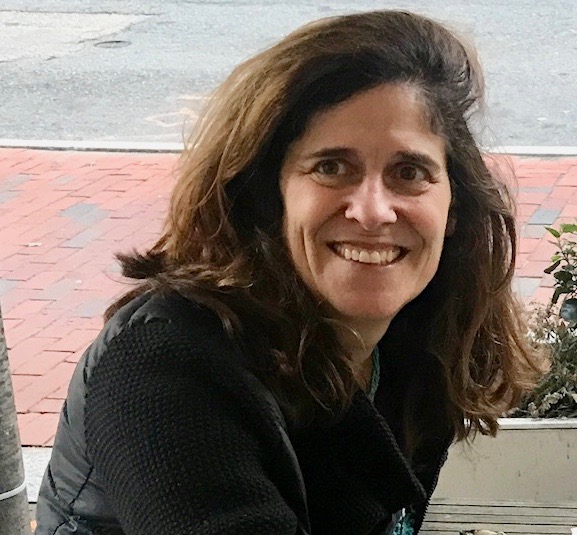
Profiles in Mentoring: Kelsey Deane on Effective Mentorships
Kelsey Deane, PhD., is a Senior Lecturer in the Assessment and Evaluation Research Centre at the University of Melbourne. She specializes in evaluation theory and practice, community psychology, youth development and wellbeing, youth programming, youth-adult relationships, and youth work practice. Dr. Deane’s research primarily focuses on projects that can directly inform the quality of supports, services, and systems affecting marginalized young people. She was previously Co-Director of Campus Connections Aotearoa, a therapeutic youth mentoring program for young people in alternative education delivered at the University of Auckland in New Zealand. We recently spoke with Dr. Deane about her past research on how empathy being a strong prediction factor in effective mentorship, featured here in the Chronicle.
Chronicle (C): What first drew you to study the qualities that make mentoring relationships successful, and how did your background or experiences influence your interest in mentorship?
Kelsey Deane (KD): My early practice experiences as a youth worker were very revealing in terms of seeing the impact that relationships with non-parental adults had on young people’s development and wellbeing – for better or worse. I was particularly struck by how much communication mattered. I decided to pursue a PhD in Psychology specializing in Positive Youth Development and youth programs because I was interested in understanding how to better support marginalized young people. The mentoring and wider youth development literature echoed what I experienced and saw in practice – quality mentoring relationships are a key lever for youth development, but good intentions aren’t sufficient to produce positive developmental outcomes. Without robust training and supervision, formal mentoring can also inadvertently create harm. At the time, mentoring research offered limited insight into the mechanisms mentors could use to create positive relational conditions for youth development. That motivated me to go deeper into the science of mentoring relationships and what truly makes them effective.
C: How might programs best train mentors to build and demonstrate empathy in ways that feel authentic and sustainable throughout the match?
KD: I’m a big fan of the Mentoring FAN (Facilitating Attuned Interactions) model – pun intended! I’ve had the privilege of with Professor Julia Pryce (Loyola University Chicago) and Professor Linda Gilkerson (Erikson Institute) to become an endorsed Mentoring FAN trainer, and Julia and I have collaborated on research into mentor attunement for many years now. Demonstrating empathy is essential in mentoring, but attunement goes beyond empathy. It’s a dynamic communication process that also involves self-regulation, cue reading, flexibly responding to cues, and genuine collaboration within relational interactions. FAN training supports mentors to bring these skills together and to build efficacy in communication with youth, from rapport-building, through relationship development and maintenance. It also provides tools for navigating challenging moments.
C: Looking ahead, what questions or areas of exploration excite you most for future research on mentorship efficacy and the impacts of such relationships for youth?
KD: I’m particularly excited about research that examines mentoring at the micro-skill level— identifying communication strategies that can be embedded into training programs. Behavioural observation studies offer unique insights into these processes, and I’d love to see more investment in mentoring research that mirrors what has been happening in the relationship science field in this regard. Understanding these fine-grained interactions could transform how we design mentor training and ultimately strengthen the impact of mentoring.
Read the full paper here.