Profiles in Mentoring: Katherine Philp on the Credible Messengers Youth Gang Prevention Mentoring Program
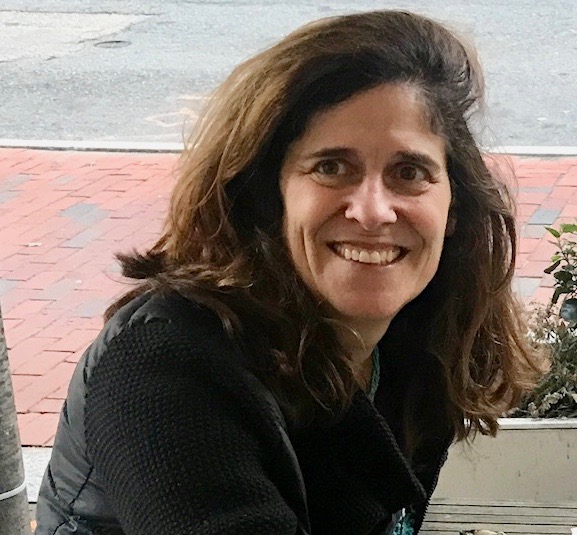
Katherine D. Philp, Ed.D., is the Director of the Education Knowledge Broker Network, where she leads efforts to connect practice and research communities to support the equitable production and use of evidence. Her work centers on after-school programs, youth development, and the role of adult social networks in expanding learning opportunities for young people. She earned her Ed.D. in Curriculum and Instruction from UCF and also holds a Master of Public Health from the University of Pittsburgh. We recently had the opportunity to speak with Dr. Philp about her paper on understanding motivations of youth gang participation to improve mentoring programs, featured here on the Chronicle.
The Chronicle (C): What first sparked your interest in understanding why young people join gangs, and how did your background working with Credible Messengers or justice-involved youth shape the questions you wanted this study to answer?
Katherine Philp (KP): This study evolved from my long-term partnership with a Credible Messenger Mentoring organization. In our team meetings, mentors expressed frustration when mentees chose gang participation despite their best efforts at prevention. Our mentors were interested in a framework that could better explain why youth were drawn to gangs. Both their own thinking and the evidence-base often exposed conflicting rationales for gang participation. For example, a commonly cited reason for joining is for safety, but youth in gangs are more frequently exposed to risk and violence than their peers. Peer pressure or a desire for peer acceptance is also commonly cited as driving gang involvement, but mentors are adept at creating positive, peer-engaged activities for youth. We needed a framework that could help us make sense of these conflicting logics. As an educator, I was familiar with theories of motivation as applied to learning, though I found only one other study exploring Self-Determination Theory in the context of gang joining in the literature. In bringing this information back to the team, everyone agreed that we had a valuable opportunity to explore the process of gang joining from an SDT lens.
C: In this study, you applied self-determination theory to participants’ narratives of gang joining; what did you find most compelling or unexpected about how needs for belonging, competence, and autonomy showed up in their stories?
KP: Belonging, unsurprisingly, was a strong theme in the study, but we found a more complex story in the data that began to untangle some of our questions. Like current mentees, many of our participants were part of positive communities, like sports teams or youth groups, prior to or even during gang involvement, suggesting belonging alone was not driving gang activity.
We found that our participants were highly aligned with what SDT calls ‘introjected regulation’, a behavior based on a need for social acceptance or status. Many of our participants were extremely ‘successful’ in their roles, often quickly assuming leadership positions within the gang and garnering respect from peers. The gang allowed them to fulfill their need for competence and belonging, but autonomy emerged as a key piece of the puzzle. Our participants almost universally conveyed a sense of inner conflict or a duality of character, sometimes describing themselves as playing a role or a game. Their decisions related to gang involvement were driven by the need to maintain competence and belonging and were never fully autonomous or without external influence.
Surprisingly, the desire to meet basic psychological needs was so strong that, for our participants, it appeared to override a need for physical safety. Participants chose high-risk activities or violence because the psychological reward felt more critical than staying out of harm’s way.
C: Based on what you learned, what are the most important takeaways for youth mentoring programs, particularly Credible Messengers initiatives, that want to more effectively address the underlying motivations that draw young people toward gangs?
KP: While there is a need for continued research on gang joining motivations, our team hopes that our work helps to reframe how we think about youth gang participants. An SDT-lens shifts us from viewing gang involvement as deviant behavior to a somewhat rational (though ultimately harmful) attempt to meet basic psychological needs. This framing becomes more powerful when you consider that involvement with gangs may begin prior to adolescence. Our participants provided rich narratives of early environments that failed to meet, or actively harmed, their needs for belonging, competence, and autonomy. Now we’re asking how we can use this framework to improve our practices to better meet the needs of youth. For example, mentors and program leaders might examine how they are attending to more than just peer belonging in their work. SDT provides a useful road map for understanding youth’s behaviors and underlying motivations, but Credible Messengers are best positioned to understand how these theoretical constructs might show up in the lives of their mentees. Mentors are already adept at connecting with gang-involved youth and drawing from lived experience to provide relevant guidance; an SDT framework can help them better understand the conditions that may be thwarting basic psychological needs of their mentees and provide individualized supports that address the specific contexts and motivations of their youth.
Read Dr. Philp’s full paper here