First-Gen Students Need a Mentoring Network, Not Just One Mentor, Study Finds
Monjaras-Gaytan, L. Y., Sánchez, B., Raposa, E. B., Lovell, C., & Salusky, I. (2026). The role of institutional natural mentors in first-generation college students’ social belonging and academic outcomes. American Journal of Community Psychology, 77, 385–396. https://doi.org/10.1002/ajcp.70038
Introduction
First-generation college students, those whose parents never completed a four-year degree, continue to graduate at markedly lower rates than their peers: 56% earn a bachelor’s degree, compared to 74% of students whose parents graduated from a four-year institution. The gap traces to overlapping barriers: limited familiarity with how to navigate college, difficulty feeling socially accepted, and financial insecurity that competes with time spent building connections. One resource that may help close this gap is what researchers call institutional natural mentors, faculty, staff, and administrators who form supportive relationships with students organically rather than through formal matching programs. Drawing on Marc Hagler’s 2018 theoretical model, Monjaras-Gaytan and colleagues (2026) note these institutional agents typically hold positions of relative status and influence, giving them particular capacity to help students learn the unwritten rules of college and build an academic identity. Despite this theoretical promise, little empirical work has examined what predicts whether a first-generation student actually acquires one of these relationships, or whether having one changes anything that matters. The current study extends this work across a full three years, long enough for these relationships to develop and show measurable effects.
Methods
The study followed 358 first-generation students recruited from two predominantly white institutions and one historically Black university, surveyed before college and at the end of each of their first three years. Students reported help-seeking beliefs at baseline, then identified any institutional mentors and their GPA and sense of belonging at later timepoints. Researchers used path analysis, controlling for race, to test whether help-seeking beliefs predicted mentor attainment and whether mentors in turn predicted third-year outcomes.
Results
Quantity of mentoring relationships, not merely their presence, predicted student outcomes. Help-seeking beliefs before college did not significantly predict whether a student secured even one institutional mentor, but they did predict how many mentors a student accumulated by year two.
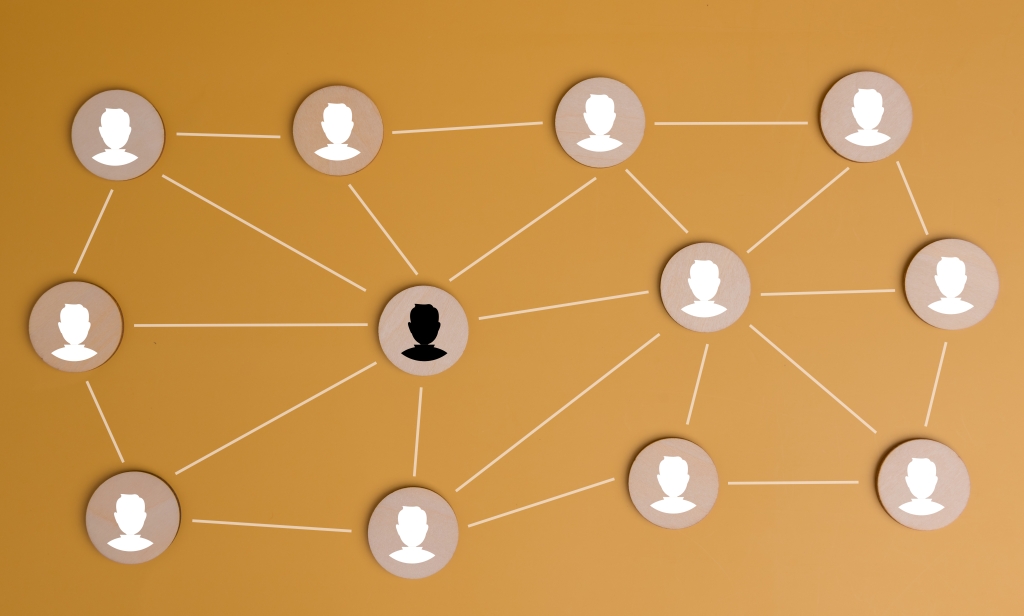
Students with more institutional mentors by year two reported significantly stronger campus belonging by year three. That same count showed no significant relationship to GPA. The hypothesized indirect pathway, help-seeking beliefs boosting mentor count, which would raise belonging and GPA, was only partially supported; the indirect effect on belonging trended in the expected direction but wasn’t significant, and the effect on GPA was essentially null. Descriptively, only 21% of students (76 of 358) reported having even one institutional mentor within their first two years, and among those, 135 mentoring relationships were reported total, ranging from one to seven per student. Nearly half of mentors were White (47%), most were female (62%), and the largest role category was professor (33%). Ultimately, this study revealed that a broader network of institutional connections predicts feeling like you belong on campus. Academic performance, at least by self-reported GPA, doesn’t appear to respond to institutional mentoring in the same direct way.
Discussion
The authors interpret this as a meaningful distinction between initiating a mentoring relationship and expanding one. Help-seeking beliefs don’t determine whether a student forms that crucial first connection, that step may depend more on structural conditions: campus climate, competing outside obligations, and cultural beliefs about the appropriateness of seeking help from authority figures. Once that first connection exists, though, a student’s beliefs about seeking help appear to matter more, shaping whether they build a wider network rather than stopping at one. This aligns with Hagler’s broader model, which frames institutional mentors as valuable partly because they’re embedded in a campus’s social hierarchy and can open doors to further connections. But the researchers note their findings diverge from theoretical expectations on GPA, suggesting mentoring may influence academic performance only indirectly, by first shaping a student’s sense of fit or motivation, over a longer timeframe than this study could capture. Not all mentoring relationships are likely equal; a mentor who advocates for a student academically may carry different weight than one offering general encouragement, a distinction this study didn’t measure.
Implications for Mentoring Programs
This study suggests programs supporting first-generation students should aim to build multiple institutional connections rather than treating one designated mentor as sufficient, since breadth of network, not the mere presence of a single relationship, predicted stronger belonging. Institutions should also recognize that helping students form that first connection may require addressing structural and cultural barriers directly, rather than assuming better help-seeking attitudes alone will get students in the door.
Read the full article here