Profiles in Mentoring: Dr. Maureen Vandermaas-Peeler on a Multiple Mentor Model
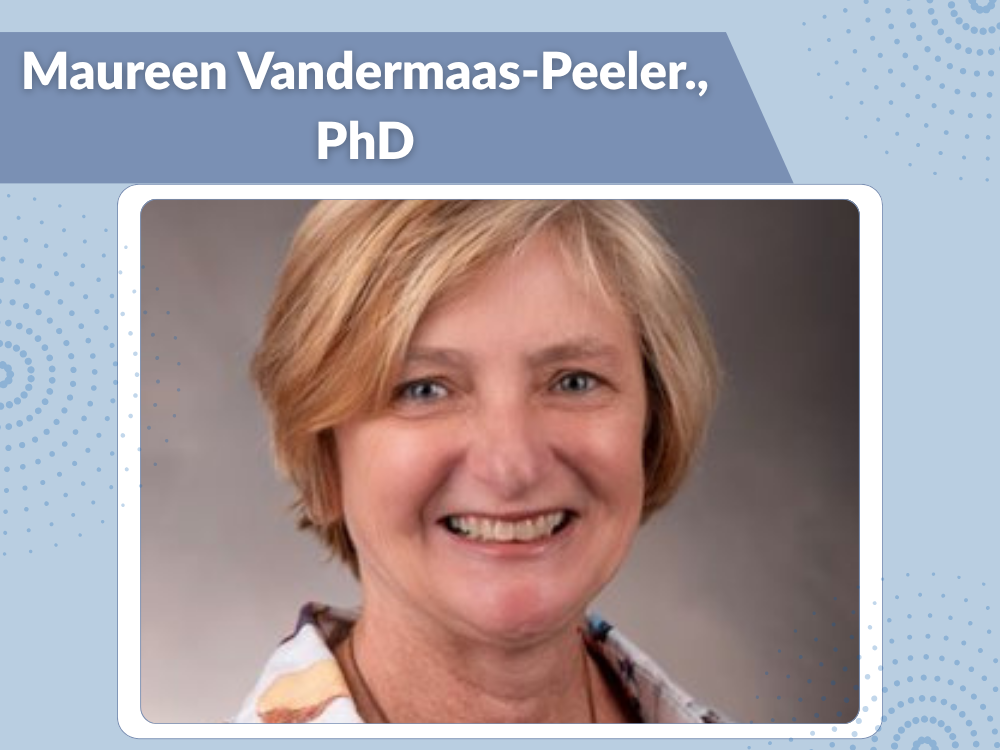
Maureen Vandermaas-Peeler is professor of psychology at Elon University, where her research explores the intersections between informal learning and play in early childhood, adult guidance of children’s inquiry and discovery, and the sociocultural and global contexts that shape how people learn and mentor one another. She has directed Elon’s Honors Program, co-led a national seminar on excellence in mentoring undergraduate research, and served as an institutional leader for the American Council on Education’s Learner Success Lab, with a focus on mentoring for learner success. She now serves as founding director of Elon’s Center for Research on Global Engagement, where she continues to study intercultural learning and undergraduate research mentoring across global contexts. We recently had the opportunity to speak with Maureen about her paper on mentoring and student success, featured here in The Chronicle!
The Chronicle (C): What drew you to the study of mentoring constellations?
Maureen Vandermaas-Peeler (MVP): Our interest in studying mentoring constellations emerged initially from our research on mentoring undergraduate research. Maureen co-led Elon’s Center for Engaged Learning (CEL) 2014-2016 research seminar on Excellence in Mentoring Undergraduate Research, working with Jessie Moore, Director of CEL, colleagues Paul Miller, Brad Johnson, and Laura Behling, and participants from diverse institutional and cultural contexts. Together, we were interested in exploring non-hierarchical, relational models of mentoring, and identifying mentoring practices that foster high-quality undergraduate research experiences.
More recently, our collaboration to study mentoring constellations developed from an institutional self-study focused on mentoring relationships in collaboration with the American Council on Education’s Learner Success project. Mentoring is an essential component of our work at Elon, with a student-centered, relationship-rich educational environment, and part of the institutional strategic plan for 2030. We share more about the mentoring constellation model, the definition of mentoring that emerged from our research, and the continuing collaboration among Maureen, Jessie, and Tim Peeples at Mentoring Matters.
(C): Your study found that faculty with historically marginalized identities bear a disproportionate and often uncompensated mentoring load at a predominantly White institution. How do you think institutions should take accountability here?
(MVP): This was a robust finding in our research, which included interviews with over 100 faculty, staff, and students. Faculty and staff mentors reported significant benefits derived from their mentoring relationships with students, sometimes crediting these relationships as the primary reason for their careers in higher education. However, mentor capacity, invisibility of the work, and lack of compensation were cited as substantial concerns. Institutions must develop appropriate and equitable compensation structures for mentoring, given its importance for student success and well-being. The mentoring constellation model suggests that students with historically marginalized identities can identify multiple supportive relationships and that the heavy burden of serving all the students’ needs should not fall on one mentor.
(C): What would you most want other institutions to understand before they try to adopt or adapt this approach?
(MVP): The mentoring constellation model offers myriad opportunities for personal and professional development, not only for students but also for faculty, staff, and community members, depending on the context in which the relationships are developed and sustained. As seen in the Relationship-Rich Mentoring Map, mentoring constellations include a range of significant relationships, which collectively enact different characteristics (e.g., trust, reciprocity) and serve multiple functions (e.g., academic support, career support, identity support) within a relationship-rich educational context. The value of the mentoring constellation model is that one mentor is not expected to fulfill all these needs. Our research conducted over the past six years confirms that students readily report having mentoring constellations, with multiple mentoring and meaningful relationships. They also identify gaps in their constellations. Helping all students identify and sustain multiple mentoring relationships is the goal. It is essential for institutions to differentiate mentoring from other relationships and also to recognize and value all relationships in the constellation.
Read Dr. Maureen Vandermaas-Peeler full paper here.