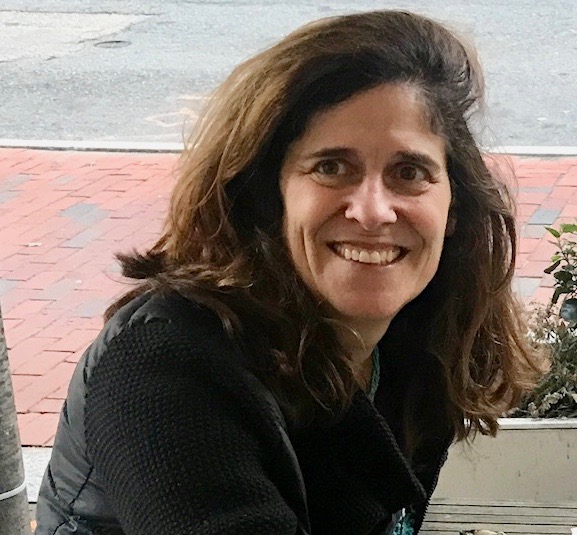
Profiles in Mentoring: Emiola Oyefuga on the Significance of Social Capital on Educational Aspiration
Emiola Oyefuga, PhD, is an Assistant Professor in the School of Public Health at Virginia Commonwealth University with over 15 years of experience in international development. Her professional and research work spans education, gender, justice, conflict, and intimate partner violence. Her research examines how social capital and community engagement shape educational environments, with a particular focus on how relationships influence student wellbeing and safety. We recently had the opportunity to speak with Dr. Oyefuga about her paper on the influence of family social capital on students’ higher education academic achievement, featured here in The Chronicle!
The Chronicle (C): What initially drew you to the concept of social capital, and how did your own academic or professional experiences shape the questions you wanted to explore about family relationships and educational achievement?
Emiola Oyefuga (EO): I was initially drawn to the concept of social capital because of my years working on international development projects. That experience showed me that relationships matter. Access to information, encouragement, expectations, and institutional knowledge all contribute to community functioning and individual achievement.
Working with communities in developing countries led me to think more broadly about how relationships and community networks influence their members’ opportunities and outcomes. Those experiences shaped the kinds of questions I later asked in my academic (Ph.D) journey, particularly around how diverse socioeconomic contexts might influence students’ academic preparedness and achievement.
I looked at multiple forms of relationships and social capital, including family relationships. I was interested not simply in whether parents were involved, but in how they were involved, what kinds of support mattered, and whether those forms of support operated differently depending on gender, race, or socioeconomic context. Social capital provided a framework to examine those subtleties.
C: One of the more nuanced findings is that different dimensions of family social capital appear to matter differently for students depending on gender, race, and socioeconomic context; which of these patterns surprised you most, and how should practitioners interpret these differences without falling into deficit-based thinking?
EO: One of the more nuanced findings was that family social capital does not operate the same way for all students. While family relationships were generally associated with higher academic achievement, the strength of those associations varied by gender, race, and socioeconomic context.
What stood out to me was how context-dependent these effects were. Certain forms of support appeared to matter more for some groups than others, which suggests that family resources interact with broader structural and institutional conditions. These differences shouldn’t be interpreted as deficits within families. Instead, they reflect how educational systems translate relational resources into opportunity unevenly. For practitioners, the key takeaway is to recognize variation without judgment. Families support students in diverse ways, and institutions need to be attentive to how their structures either amplify or limit the impact of those supports.
C: Based on your findings, what would you most want educators, mentors, or policymakers to understand about how family relationships and broader social contexts continue to shape students’ academic trajectories well into higher education?
One message I would want educators and policymakers to take away is that student success is relational. It is not just about individual motivation or talent. Institutions have a responsibility to recognize the diverse ways families support their students and to create environments where those strengths can translate into opportunity.
Read Dr. Oyefuga’s full paper here